


Australia’s Battery Revolution: Insights from Solar Juice and Fox ESS
 Apr 07,2026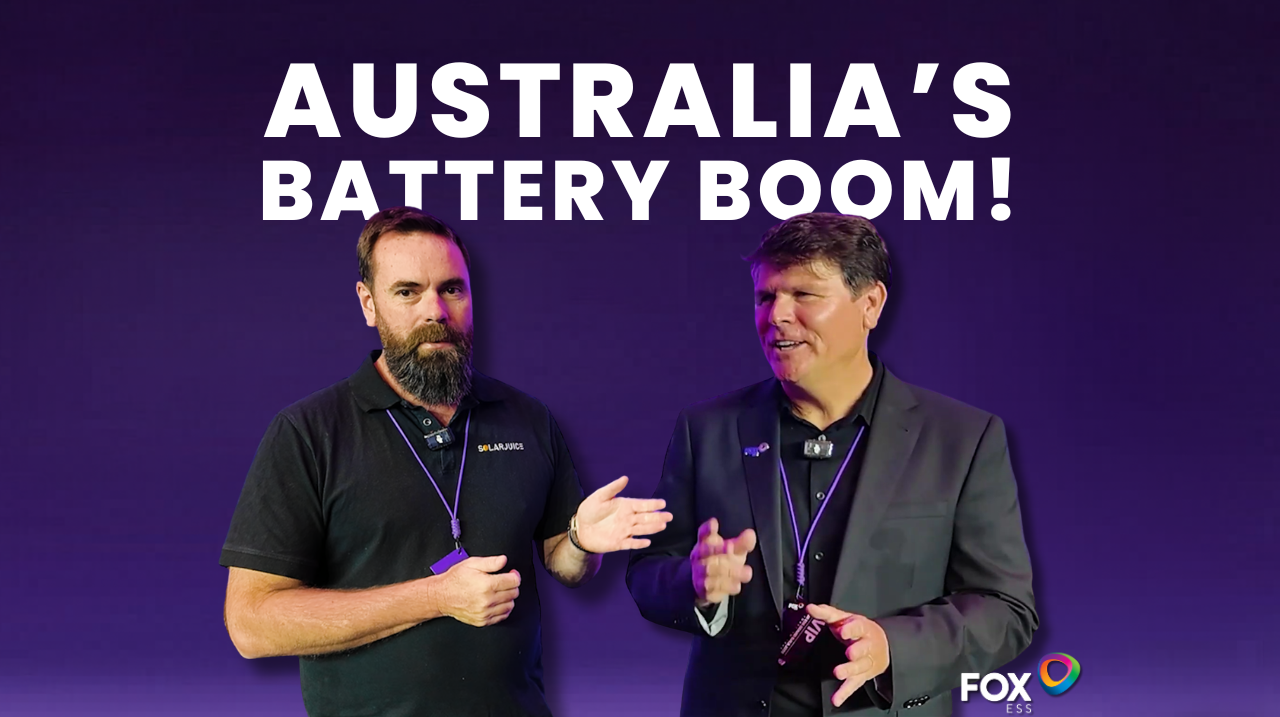
The Australia battery solar arbitrage revolution is currently transforming the national energy market as it shifts toward a full-scale storage model. With over one in three homes already using grid-connected solar, the nation is a global leader in residential renewable energy. This rapid evolution is being closely observed by companies such as MSPD Africa and Solar Juice, led respectively by Mark Becker, the founder of MSPD Africa and dedicated partner of Fox ESS in South Africa, and Andrew Burgess, as mature solar markets begin pivoting toward storage-led models. Consequently, this shift allows homeowners to take advantage of energy arbitrage by storing low-cost power for later use, while distribution leaders like Solar Juice continue to drive the transition through infrastructure and modular storage expertise.
Global Insights at the Fox ESS Gala
The scale of this movement was recently highlighted at a Fox ESS gala event in Wenzhou, China. This event hosted over 400 partners from around the world. During the event, Mark Becker , representing the South African market, spoke with Andrew Burgess, the founder of Solar Juice Australia, about the rapid acceleration of the Australian market.
Andrew noted that the Australian residential market has matured significantly since he and his co-founder, Rammy, started Solar Juice in 2009. While South Africa faces power reliability concerns, Australia is managing an abundance of solar power. Therefore, the country is pivoting toward distributed storage to stabilize the grid.
The Australia Battery Solar Arbitrage and Home Battery Incentives
A primary driver of this rapid growth is a strategic government initiative called the “Cheaper Home Battery Program”. This program launched in July 2025 and has seen extraordinary success in a very short period:
- Rapid Installation: In its first six months, the initiative facilitated the installation of over 180,000 systems.
- Grid Support: This surge added approximately 4 gigawatts of distributed storage to the Australian grid.
- Future Growth: Following this success, the government added $5 billion in funding. This aim is to connect 2 million Australian homes to battery storage by 2030.
Making Sustainable Energy Affordable via the Australia Battery Solar Model
The incentive program is designed to lower the barrier to entry. It does this by reducing the initial upfront capital costs for homeowners.
- Point-of-Sale Discounts: By utilizing frameworks like Small-scale Technology Certificates (STCs), homeowners receive an upfront discount.
- 30% Cost Reduction: This incentive equates to roughly a 30% discount on the total initial capital cost.
- Simplified Process: To ensure ease of use, installers handle the paperwork and trading of these certificates in the background. This provides a seamless experience for consumers.
The Rise of Energy Arbitrage
Australia’s abundance of natural sunshine has created unique opportunities for consumers. They can now control their energy costs through energy arbitrage.
- Free Midday Electricity: Effective July 2026, retailers are to offer consumers free electricity for three hours daily. This occurs specifically between 12:00 p.m. and 3:00 p.m..
- Arbitrage Opportunities: Homeowners can use battery systems to store this free midday power. Then, they can use it during expensive peak evening hours.
- Inclusive Access: This model allows even those without large rooftops for solar panels to participate in the market.
Bridging the Gap: Lessons for South Africa
While Australia celebrates its storage boom, the South African market watches closely. Currently, South Africa has less than 1% solar penetration across its population. Because the country faces significant power shortages and reliability issues, the Australian model offers a clear roadmap for the future.
Companies like Solar Juice, in partnership with Fox ESS, are leading the distribution of modular and scalable storage technologies that prioritise long-term reliability and strong support networks. For MSPD Africa, these developments highlight the opportunity to accelerate local adoption by learning from more mature markets. As Mark noted at the gala, embracing modular storage solutions and forward-thinking energy models could position South Africa for a more stable and sun-powered future.

 Jul 14, 2026


